

Characteristics of insulation and sheath materials
What types of insulation and sheathing materials are available? How do PVC, PUR, TPE, FEP, PFA, silicone and other materials differ in terms of their properties, and which material is suitable for which application?
PUR cables and PUR wires are particularly suitable for dynamic applications involving high mechanical stresses, as well as for use where they come into contact with oils, cooling lubricants and many chemicals. Typical areas of application for PUR cables include drag chains, robotics, conveyor technology, and mechanical and plant engineering.
Examples of suitable products and further information:
PUR cables - properties and applications
PVC cables and PVC wires offer a tried-and-tested and cost-effective solution for standard applications with normal mechanical requirements and low to medium levels of movement. They are frequently used in machinery, control cabinets, control systems and fixed installations.
Relevant product examples and further information:
PVC cables - properties and applications
The selection of suitable insulation and sheathing materials is a key component of cable design and plays a decisive role in determining a cable’s performance, reliability and service life. Depending on the application, cables must withstand various mechanical, thermal, chemical and electrical requirements. Insulation and sheathing materials therefore fulfil different functions depending on the area of application and should be selected in accordance with the specific operating conditions.
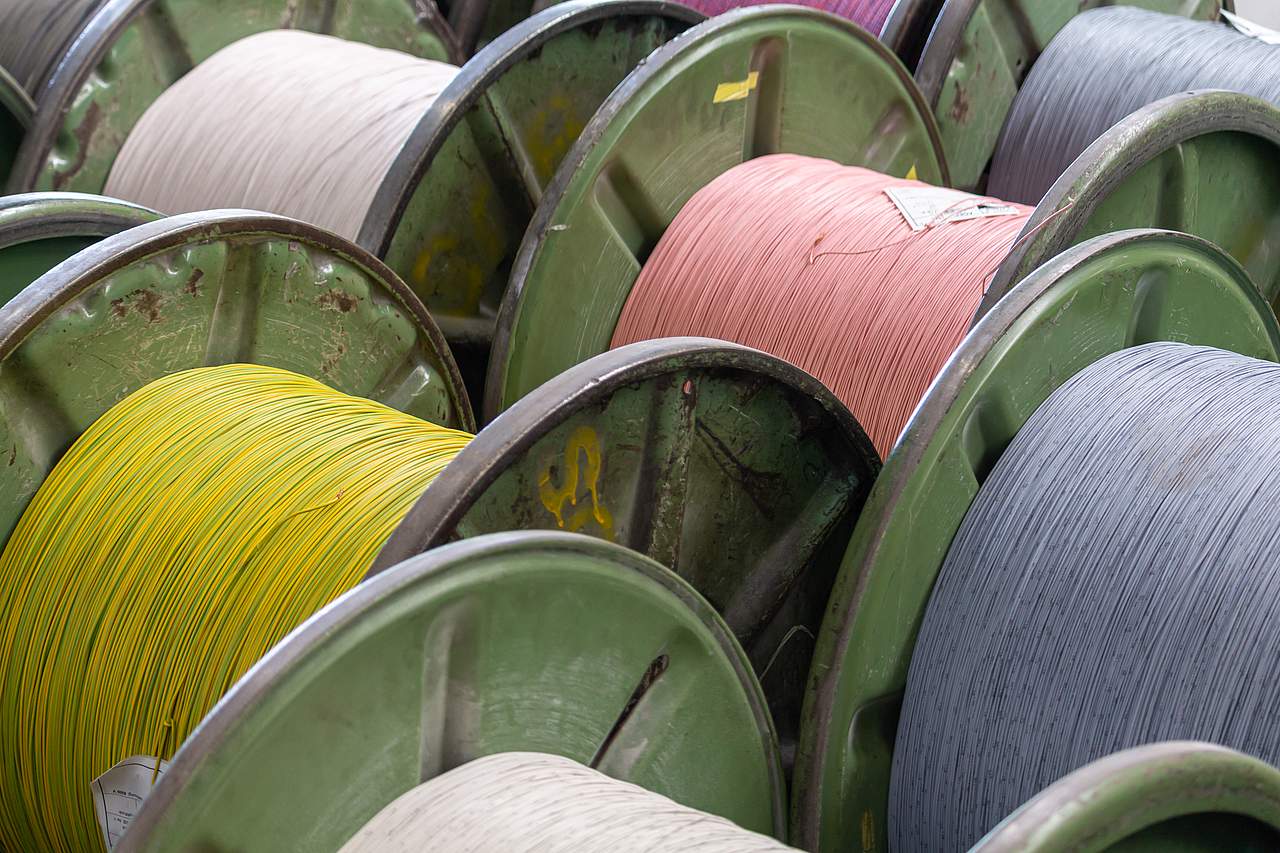
Cable insulation (core insulation)
The primary purpose of cable insulation is to provide electrical insulation for the individual conductors and to ensure a safe voltage withstand capacity. Depending on the application, other material properties such as the dielectric constant, the dielectric loss factor or temperature resistance also play an important role. These properties are particularly important for high-quality data, measurement, sensor and communication cables.
Cable sheath (outer sheath)
The cable sheath protects the cable from external influences and plays a key role in ensuring its service life and operational safety. Depending on the operating conditions, different properties are required, such as high abrasion resistance, flexibility, tensile strength, resistance to oil and chemicals, as well as resistance to UV radiation, weathering and moisture. In demanding industrial applications, additional requirements such as flame retardancy, halogen-free composition or radiation resistance may also apply.
Selecting the optimal combination of materials
Depending on the application, SAB Bröckskes processes a range of insulation and sheathing materials to ensure that cables and wires are optimally tailored to the mechanical, thermal, chemical and electrical requirements.
Materials used include PVC, PE, PP and PUR, as well as engineering thermoplastics such as TPE-E, TPE-O, TPE-V and TPE-S. For applications with particularly high requirements, SAB Bröckskes also processes high-performance plastics such as FEP, PFA, ETFE and silicone. This enables the creation of customised material combinations that are precisely tailored to the specific application.
When selecting materials, factors such as cost-effectiveness, service life, environmental compatibility and recyclability play an important role alongside technical properties. The aim is to select the technically and economically optimal material combination for each application.
The following material comparisons and the technical comparison table highlight the key properties, differences and areas of application of the various insulation and sheathing materials, and assist in selecting the appropriate material for different industrial applications.
Comparisons of materials for cable insulation and cable sheaths
The choice of a suitable insulation or sheathing material depends on the requirements of the specific application. The following material comparisons highlight the key differences, advantages and typical areas of application for selected materials, making it easier to choose the right material solution.
PUR or PVC – Which sheath material is more suitable?
PUR and PVC are among the most commonly used sheathing materials for industrial cables and wires. Which material is the better choice depends largely on the mechanical, chemical, thermal and economic requirements of the application in question. Whilst PVC offers a cost-effective solution for many standard applications, PUR really comes into its own, particularly when subjected to high mechanical stresses and in dynamic applications.
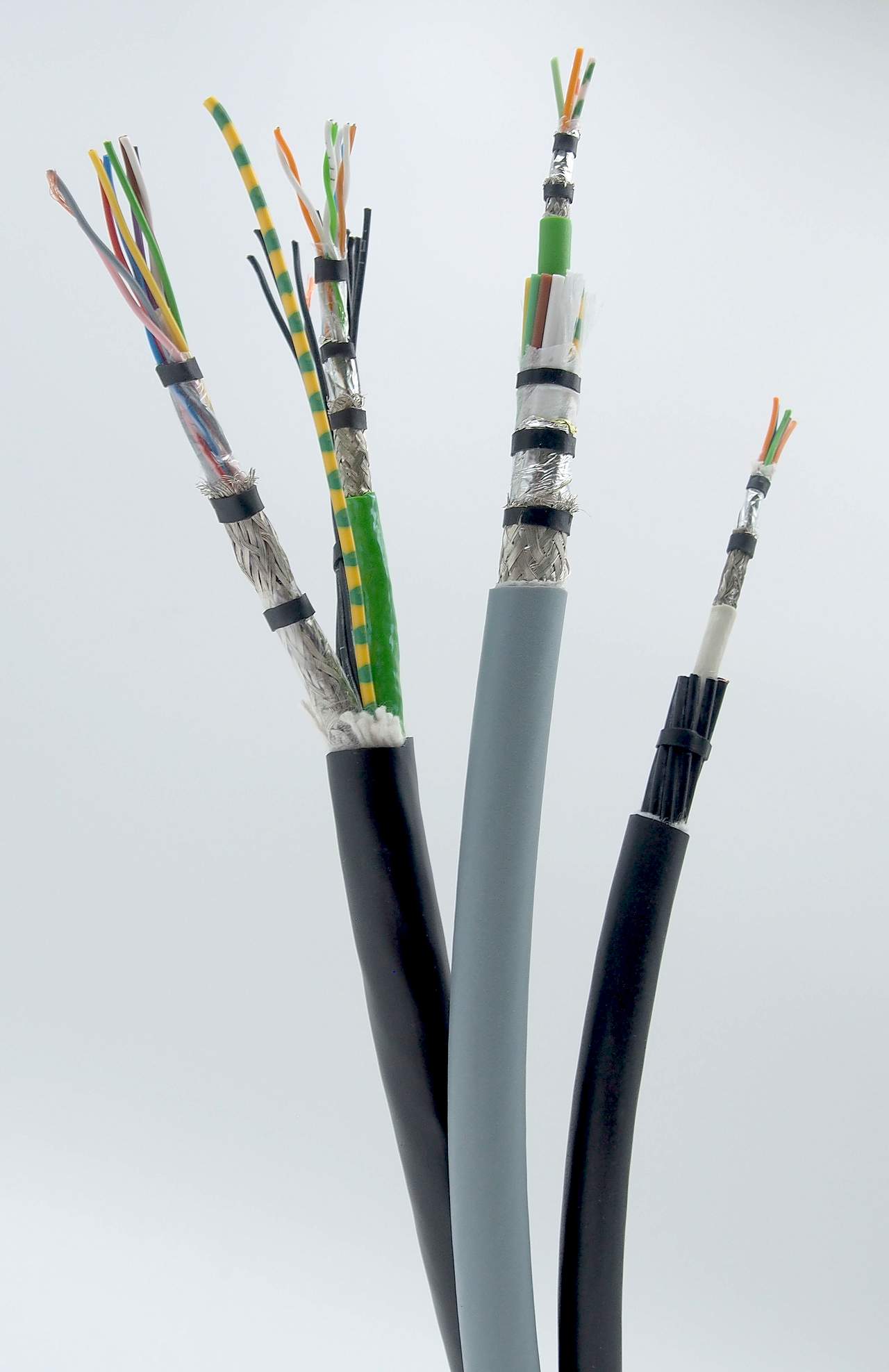
When is a PUR outer sheath recommended?
PUR cables are particularly suitable for applications involving high mechanical stresses and frequent movement and bending cycles. Thanks to their high resistance to abrasion, tearing, notching and alternating bending, they are frequently used in drag chains, robotics, conveyor technology and in mechanical and plant engineering.
PUR cables also demonstrate their advantages when in contact with oils, cooling lubricants and many chemicals, as well as in demanding environmental conditions involving moisture or abrasion. UV-resistant PUR cables are also available for outdoor use.
When is a PVC outer sheath recommended?
PVC cables are particularly suitable for applications involving normal mechanical stresses and low to medium levels of movement. They are frequently used in machinery, control cabinets and control systems, as well as for cables that are permanently installed or moved only occasionally.
Thanks to their balanced combination of technical properties and cost-effectiveness, PVC cables represent a tried-and-tested and economical solution for many standard applications.
Decision-making guide: a direct comparison of PUR and PVC
The following decision-making guide shows which jacket material is particularly suitable for typical industrial applications. However, the final choice of material should always be based on the specific operating conditions.
| Requirement | PUR Cable | PVC Cable |
|---|---|---|
| High mechanical stress | ✓ Very suitable | ○ Suitable for normal use |
| Continuous motion (e.g. drag chains, robotics) | ✓ Very suitable | ○ Suitable to a limited extent |
| Temperature range (flexible use) | -40 °C up to +90 °C | Depending on the type of PVC, -20 °C to +105 °C |
| Flexibility at low temperatures | ✓ Very good | ○ Depending on the type of PVC |
| Abrasion resistance | ✓ Very high | ○ Average to good |
| Resistance to oil, chemicals and media | ✓ Very good | ○ Suitable depending on the medium |
| Outdoor areas and weather conditions | ✓ Special versions available | ○ Depending on the cable type |
| Service life under heavy use | ✓ Very high | ○ Suitable for standard applications |
| Standard applications | ○ Suitable | ✓ Very suitable |
| Cost-effectiveness/Costs | ○ Increased investment | ✓ Cost-effective solution |
Comparison of the properties and differences between materials used for cable insulation and cable sheathing
The comparison table below sets out the key technical properties of various insulation and sheathing materials and serves as a guide for selecting suitable materials. We would be happy to advise you on selecting materials for your specific application and assist you in choosing the optimal combination of materials.
| Material | Temperature range flexible | Flame retardance | Tensile strength N/mm2 | Elongation at break % | Abrasion resistance | Dielectric constant at 800 Hz approx. | Specific resistance Ohm x cm | Break-down-voltage kV/mm | Radiation resistance cJ/kg |
| PVC special | +5°C/+70°C | good | 15 | 250 | medium | 4,0 | 1013 | 12 | 8 x 10⁷ |
| PVC cold resistant | -20°C/+70°C | good | 15 | 250 | medium | 4,0 | 1013 | 12 | 8 x 10⁷ |
| PVC heat resistant | +5°C/+105°C | good | 18 | 200 | medium | 3,5 | 1013 | 18 | 8 x 10⁷ |
| PVC oil resistant | +5°C/+70°C | good | 15 | 250 | medium | 4,0 | 1013 | 12 | 8 x 10⁷ |
| PUR halogen-free* | -40°C/+90°C | good | 25 | 400 | very good | 6,0 | 1012 | 20 | 5 x 10⁷ |
| PE | -40°C/+70°C | - | 20 | 500 | good | 2,4 | 1017 | 30 | 7 x 10⁶ |
| TPE* | -40°C/+90°C (up to +130°C) | - | 30 | 500 | good | 3,3 | 1014 | 20 | 1 x 10⁷ |
| Besilen® | +180°C | good | 7 | 200 | moderate | 3,2 | 1015 | 20 | 2 x 10⁷ |
| FEP | +180°C | very good | 20 | 250 | good | 2,1 | 1018 | 20 | 5 x 10⁶ |
| PFA | +250°C | very good | 20 | 250 | good | 2,1 | 1018 | 20 | 2 x 10⁶ |
| ETFE | +135°C | very good | 45 | 250 | good | 2,6 | 1016 | 30 | 5 x 10⁷ |
| SABIX®* from basis PP | -40°C/+90°C | - | 30 | 500 | good | 2,3 | 1016 | 30 | - |
| SABIX®* from basis PO | -40°C/+90°C | very good | 9 | 125 | moderate | 4,7 | 1014 | - | 1 x 10⁷ |
| SABIX®** connected | -40°C/+125°C | very good | 12 | 125 | moderate | 5,0 | - | - | - |
You can find properties and specifications relating to the chemical resistance of insulation and sheathing materials here.
The values in this table are approximates and are not complete (technical modification subject to alteration).
* depending on execution
** electron beam cross-linked types
Do you have any questions about our products? Your direct line to our experts! Contact
PDF-Download
Insulation and sheath material characteristics